
Technical FAQs
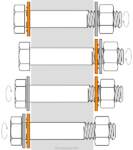
DTI Washer Configuration
I am installing some A325 bolts, and I am using direct-tension-indicator (DTI) washers. Does the DTI replace the F436 washer that I would normally use, or do I still use a standard F436 washer?According to the Research Council on Structural Connections (RCSC December 31, 2009 edition), an F436 washer is used in addition to a DTI washer with an A325 structural bolt. RCSC’s Specification for Structural Joints Using ASTM A325 or A490 Bolts, Section 6 Use of Washers, states that a ASTM F436 washer is always used, but... Read more

Tie Rod Attachment
How do tie rods attach to a structure?Tie rods are attached by sliding a gusset plate or knife plate, which is fastened to a structure, in between the ears of a clevis. A clevis pin or A325 structural bolt, is then assembled through the pin holes on the clevis and through the hole in the plate. Gusset plates are attached to the... Read more
Proper Bolt Tension
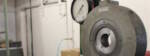
What is the proper tension for an anchor bolt, headed bolt, stainless steel bolt or bent bolt?Only structural steel bolts have an associated tension recommendation. The desired tension on a structural bolt is achieved by using a calibrated torque wrench and a Skidmore-Wilhelm load indicating device to tighten the nut with torque indicated by a verified bolt torque chart. ASTM does not have any recommendations in place for the proper tension... Read more
F1554 Head Stamping
Does ASTM F1554 require headed anchor bolts to be stamped on the head with the fastener’s grade symbol and manufacturer’s logo?Stamping the heads of F1554 anchor bolts is not required per the ASTM Specification, but Portland Bolt chooses to do so to provide a secondary identification. Product Marking ASTM F1554 anchor bolts are marked on the threaded end that projects from the concrete with a designating color code, as is required by the specification. Marking... Read more

Nut Grade Mark Visibility
Does it matter if we install nuts on A325s and A490s with the manufacturer’s ID and grade mark showing, or can they be installed either way?There is no published requirement for making sure the ID marks are on the outside and visible. The main concern would be being able to ascertain that the proper nuts were installed. If all the ID markings are on the inside, they would not be visible, and an inspector could not see them. That said,... Read more
Weathering Steel
Do A325-3 and A490-3 bolts rust?Yes, A325-3 and A490-3 are made from weathering steel containing copper, chromium, and nickel which induces the surface to form a heavy oxide coating that protects the base material from corroding any further. This brownish-red coating seals the material from corrosion much like other external coating options. These types of bolts are more often used... Read more
Dapping Tool Drill Size
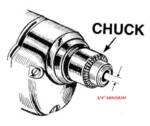
What size drill is required for use with your shear plate dapping tools?Both the shear plate dapping tool and the split ring grooving tool require a heavy duty drill or drill press with a 3/4” minimum chuck size. Many of the small, cordless drills on the market only have a 3/8” or 1/2” chuck and would not be able to open their chuck wide enough to accept... Read more
Rod with Nut vs Headed Bolt
Can I substitute a rod with a nut for a headed bolt?We do not recommend allowing this type of substitution without approval from the Engineer of Record. Based on performing mechanical tests to the ASTM specification F606 which covers the testing of construction fasteners, a rod with a nut would typically not produce the same strength characteristics as a bolt with a forged head. Under F606,... Read more
Headed or Bent Anchor Bolts
Is it better to use a headed anchor bolt or a L-bolt?Engineers often design anchor bolts in one of four common configurations. We see anchor bolts with forged heads, 90 degree bends, straight rods often with anchor plates on the bottom, and swedged rods. Engineers will design a structure using different grades and configurations based on the size, weight and design of a structure, wind forces,... Read more
Anchor Sleeves and Pull Out Strength
I am an engineer and I am calculating the strength of an anchor bolt for a job that I am designing. I want to use plastic sleeves on many of the anchor bolts on my project, but I don’t know how these sleeves affect the pull out strength of the anchor bolts. Is there any information on the subject?Portland Bolt is unaware of any information that addresses this question. Plastic sleeves seem to be a “gray area” due to the fact that no specifications cover them or design guides mention them. AISC Design Guide 1, 2nd Edition, Base Plate And Anchor Rod Design, Page 49, does address steel sleeves and has information on... Read more